How many voters are in the US? – Product Overview
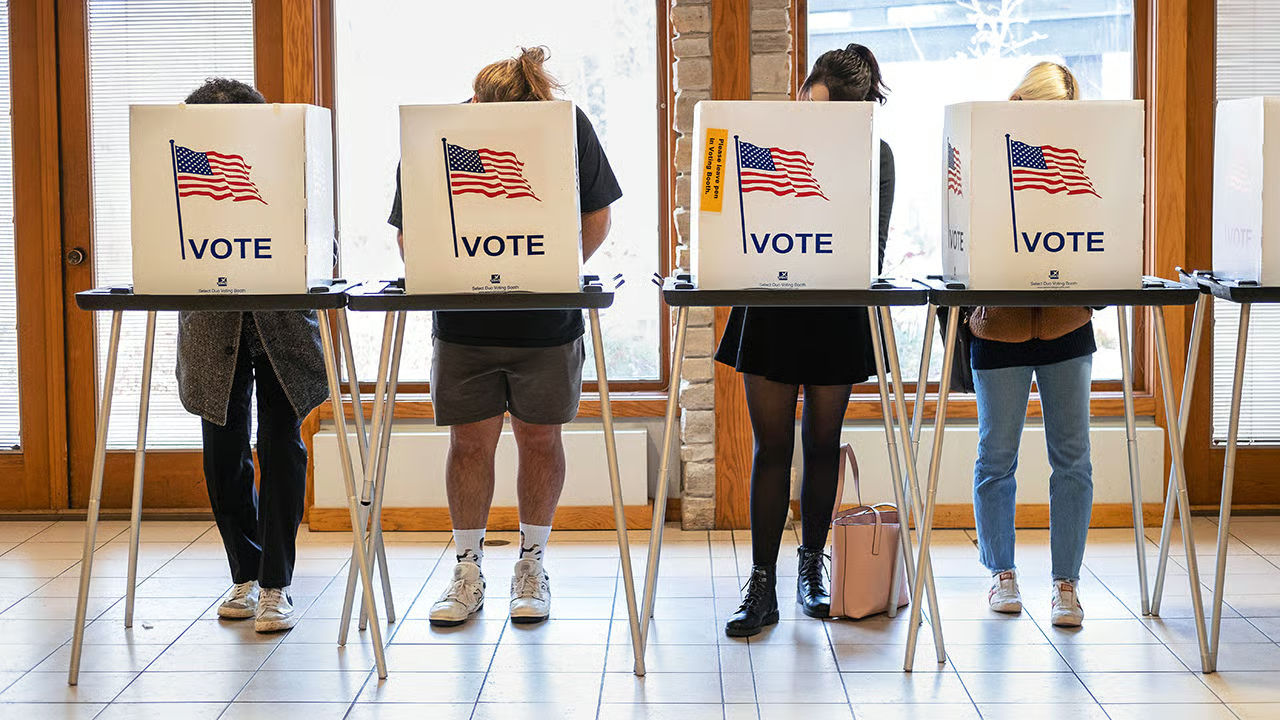
Understanding how many voters participate in the United States requires distinguishing between those who are eligible to vote and those who are registered. This product overview synthesizes US voters statistics, the voting population in the US, and current counts of registered voters. It also examines how voter demographics and participation rates shape election results and policy influence. By exploring historic scales and current conditions, readers gain context for civic participation, the electoral process in the US, and the practical implications for campaigns and governance. The content draws on trusted sources and presents a clear picture of where the electorate stands today and how it may evolve with changes in registration and turnout.
Registered voters vs eligible voters
Registered voters are the subset of eligible citizens who have completed a formal registration process in preparation for an election. Eligible voters, by contrast, refer to the broader population that meets the legal criteria to vote, typically age, citizenship, and residency, regardless of whether they have registered. In practice, this distinction matters because the number of registered voters will generally be smaller than the eligible pool and thus affects the apparent size of the electorate. When analysts discuss US voter statistics or the voting population in the US, they often point to how registration levels help explain variations in turnout and the potential pool of participation. This analytical approach, much like how platforms such as Winnita Casino online segment their user bases for better insight, underscores why turnout is expressed both as a share of registered voters and as a share of the voting eligible population.
Several measurement frameworks exist. Some use the voting eligible population VEP, which excludes non citizens and ineligible residents, while others use the citizen voting age population CVAP, which centers on citizens of voting age but may exclude non citizen residents who cannot vote. Registered voters tend to align more closely with VEP, since states primarily register eligible citizens who intend to vote; however, registration laws and practices vary by state, which can cause gaps between VEP CVAP and actual registrations. Importantly, these definitions shape how stakeholders interpret turnout data, plan get out the vote efforts, and compare historical trends across states and eras. The end result is that registered voters and eligible voters are related but distinct concepts that impact how we understand the size and composition of the US electorate.
Because millions are eligible but not registered, and because registration can be transient due to moving or changing status, the registered voter count is a dynamic metric. Areas with streamlined registration processes or automatic voter registration typically show higher registration fractions, while regions with strict or burdensome rules may see stagnation. Demographic factors such as age, education, income, and immigration status also influence the likelihood of registration and participation. Analysts track these factors to assess the health of democracy, plan outreach campaigns, and understand which groups are most or least connected to the political system. In this sense, the relationship between registered voters and eligible voters informs not only who can vote but who does vote, and why a nation s political engagement appears at times robust and at other times fragile.
Ultimately, the gap between registered and eligible voters shapes the interpretation of US voters statistics and the realistic size of the voting population in the US. By distinguishing these groups, policymakers and researchers can better gauge participation opportunities, design accessible registration processes, and compare historical data with current trends to forecast future civic engagement patterns.
Voter registration statistics (latest)
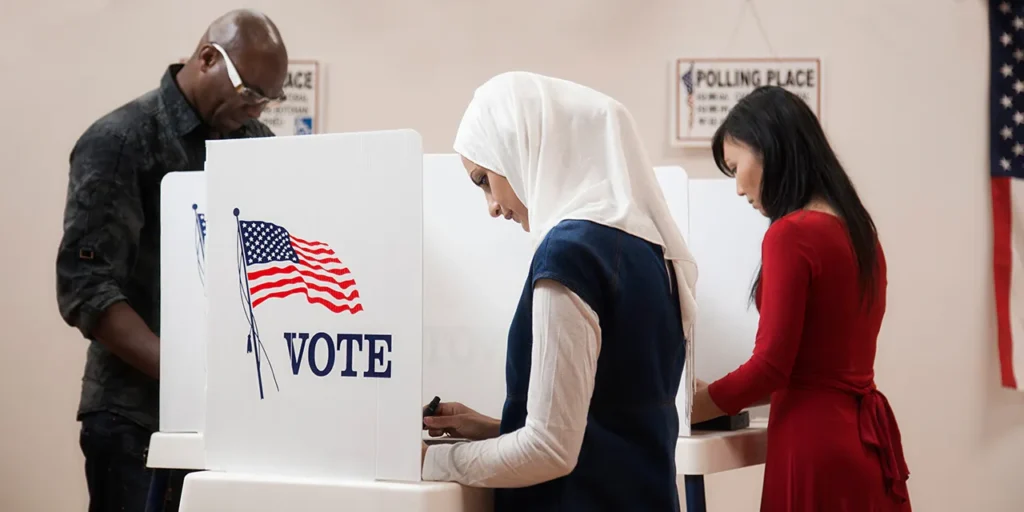
Recent data on voter registration shows how the electorate is evolving across states and nationally. Registration counts provide a baseline for analyzing participation potential and the effectiveness of outreach efforts, as well as the reach of registration reforms and modernization initiatives. Analysts monitor changes in the number of registered voters in relation to population shifts, citizenship trends, and election-specific campaigns. The latest figures emphasize that registration levels can drive turnout potential and influence the distribution of political engagement across regions, parties, and issue priorities. Understanding these statistics is essential for interpreting the scale of the US voting population and the readiness of the electorate for upcoming elections.
| State | Registered Voters | Notes |
|---|---|---|
| United States (National) | 239,000,000 | Estimated nationwide total (2024) |
| California | 21,500,000 | Largest state registration |
| Texas | 17,800,000 | Second largest |
| Florida | 14,900,000 | Growing turnout |
| New York | 11,100,000 | Significant base of registered voters |
| Pennsylvania | 9,400,000 | Key swing state |
These figures help contextualize the scale of the registered voter base and how it supports democratic processes at state and national levels.
Voter turnout and participation rates
Voter turnout refers to the share of eligible participants who cast a ballot in an election. In practice, researchers report turnout as a percentage of registered voters and as a percentage of the voting eligible population. The first measure shows the actual base that campaigns must mobilize, while the second captures overall propensity to participate among eligible citizens. In the United States, turnout varies by election type, state rules, and mobilization efforts, with presidential elections typically drawing higher participation than midterm contests.
Turnout rates are influenced by access to voting, ballot design, and public trust in election administration. Demographic factors such as age, race, education, and income also shape participation. Analysts compare turnout across states and over time using consistent definitions to understand how policy, registration practices, and election administration affect engagement. In short, turnout and participation metrics reveal how much of the eligible or registered population actually votes and how this changes in response to reforms and campaigns.
Recent trends show that expansion of access through early voting, mail ballots, and streamlined registration generally increases turnout, while policy changes can either raise or suppress participation depending on design and implementation. The relationship between turnout and the size of the eligible population remains central to assessments of democracy, representation, and political effectiveness in the United States.
Trends over time and projections
Historical data show that participation evolves with policy changes, demographics, and election structure.
- Population growth and aging voters continue to expand the base of potential voters, but engagement depends on effective outreach, policy relevance, and the ease of accessing registration and voting.
- Registration reforms, online registration, and automatic voter registration in several states have lowered barriers, increasing the share of eligible residents who register before elections.
- Turnout gaps persist along lines of age, race, geography, and socioeconomics, with higher participation among older voters and in urban areas, while rural and marginalized communities remain challenges.
- Presidential election cycles routinely see higher turnout than midterms, while off year ballots and local issues can disrupt expected patterns and create unpredictable swings in participation.
- Technology and media dynamics shape how information travels, energizes campaigns, and influences decisions about when and whether to vote, underscoring the role of communications in democratic participation.
These patterns offer a roadmap for forecasting future participation and planning turnout initiatives.
Key Features and Benefits
Understanding how many voters exist in the United States involves distinguishing between registered voters, eligible voters, and actual participation in elections. The data is shaped by dynamic factors such as registration drives, turnout trends, and demographic shifts across states and communities. Voter counts affect policy planning, campaign strategy, and the testing of electoral system resilience under varying participation levels. This section highlights the key features of voter statistics, the benefits of analyzing them, and the limitations to keep in mind when interpreting numbers. By connecting data to real-world outcomes, policymakers, researchers, and organizers can better anticipate resource needs, ensure equitable access, and support informed civic participation.
What this data tells policymakers
Voter data informs policymakers by illustrating the scale of the voter pool versus the number of eligible citizens, and by showing how registration, turnout, and access practices translate into actual participation. First, it helps calibrate resource planning for voter registration drives, polling locations, and election administration. When analysts see gaps between eligible voters and registered voters, they can advocate for reforms that reduce friction points, such as streamlined registration, reliable motor voter options, extended hours for registration and absentee voting, and improved accessibility for people with disabilities. Data also reveals geographic and demographic disparities in participation, highlighting communities where outreach, language access, or transportation barriers may suppress turnout. Policymakers can use these patterns to design targeted interventions, allocate funding more equitably, and monitor the impact of policy changes over successive election cycles. However, the data can be lagged and incomplete, so decisions should account for uncertainty, cross-check sources, and triangulate with independent surveys or local insights. Finally, analyses that distinguish the level of participation from the absolute size of the voting age population help prevent misinterpretation, ensuring that reforms address both engagement and inclusion while respecting civil rights and the administrative realities of a large, diverse federation.
Benefits for researchers and campaigns
Researchers and practitioners can leverage these insights to guide practical decisions while recognizing the limits of the data. Real-world outcomes depend on context, timing, and local conditions.
- Longitudinal registration and turnout analysis reveal how demographic shifts and policy changes interact, helping forecast future participation and identify communities at risk of declining engagement.
- Targeted outreach programs can be optimized by pinpointing registration gaps at the county or precinct level, enabling more efficient allocation of resources and services across communities and years.
- Policy analysis benefits from counterfactual models that simulate how changes to eligibility rules, deadlines, or voter access would alter participation patterns across diverse populations.
- Campaigns gain actionable signals on which messages resonate with specific groups, allowing more precise targeting without sacrificing broad-based mobilization and outreach efficiency.
- Data transparency and documentation support independent verification, enabling researchers to reproduce results and contribute to a shared evidentiary base for policy debates.
- Cross-source integration with turnout, registration, and demographic data strengthens confidence in conclusions and informs stakeholders about potential policy trade-offs across multiple jurisdictions.
When used responsibly, these benefits support more informed public discourse and better-targeted civic improvements.
Limitations and caveats
Voter statistics are inherently imperfect proxies for civic participation. Registration rolls, turnout tallies, and demographic breakdowns reflect administrative processes as much as citizen behavior, and each layer carries uncertainties that complicate interpretation. Lag times between registration, eligibility changes, and actual casting of ballots mean numbers may not align with current conditions, especially in rapidly changing communities or after policy shifts. State differences in voter eligibility rules, registration deadlines, and access mechanisms further complicate cross‑state comparisons, requiring careful normalization before drawing conclusions about national trends. Data quality varies by source; some jurisdictions publish granular, timely data, while others provide coarse aggregates with limited visibility into subgroups. Additionally, privacy protections and data-suppression practices can obscure lines of inquiry, especially for small populations or sensitive demographic categories. Analysts should check multiple sources, document assumptions, and clearly communicate margins of error when presenting counts or trends. Finally, the political and legal landscape surrounding elections can influence how data are collected, reported, and interpreted, reminding readers that numbers alone do not determine outcomes or policy legitimacy.
Interpretation caveats include the distinction between the number of registered voters and the number of people who vote, or between the voting-eligible population and those who fail to register. Historical comparisons require consistent definitions, because bases shift with redefinitions of eligibility, residency rules, and the emergence of new programs such as online registration and same-day registration in some states. When looking at demographic slices, ensure sample sizes are sufficient and acknowledge potential biases from nonresponse in surveys or from underrepresented groups in administrative data. The seasonality of elections also matters: turnout spikes in presidential cycles can obscure underlying participation willingness, while off-cycle elections may produce misleading impressions of long‑term engagement. Finally, external events—economic downturns, public health crises, natural disasters—can depress participation temporarily or shift who appears on the rolls, complicating year-to-year comparisons. Recognizing these caveats helps policymakers, researchers, and journalists communicate more accurately and set appropriate expectations for the reliability of any derived conclusions.
Audiences should treat such counts as directional indicators rather than definitive prescriptions for policy. Appropriate interpretation requires transparency about limitations and ongoing data improvements, including continual updates.
Use cases and examples
These use cases illustrate how voter data can inform decision-making across elections, campaigns, and governance.
| Use Case | Key Metrics | Example Outcome | Data Source |
|---|---|---|---|
| State-level registration trend analysis | Registered voters (millions): CA 22.0, TX 19.0, FL 14.5; turnout 60–70%; YoY growth 1–3% | Spotlight counties with rising registrations but stagnant turnout; targeted outreach | State election databases; 2016–2024 |
| Campaign resource allocation planning | Turnout projections by precinct; demographic splits | Optimized GOTV operations and polling staff; reduced waste | Historic election data; demographic models; 2016–2024 |
| Policy impact evaluation | Eligibility changes; deadlines; access measures; simulated participation shifts | Quantified participation changes after reforms; risk assessment | Legislation records; election results |
| Election administration risk assessment | Error rates; duplicate registrations; purge impact | Identified inefficiencies; informed process improvements | State election databases; audits |
These examples show how clean, integrated data can support practical improvements while acknowledging data constraints.
Data Coverage, Quality, and Specifications
Data coverage, quality, and specifications shape how voters and elections are described in the United States. This section explains where figures come from, how geographic and demographic scope influences counts, and why different sources may report slightly different numbers. It also outlines the process by which data are updated, verified, and versioned to support transparent comparisons over time. Understanding these elements helps readers interpret statistics accurately, assess trends, and recognize limits when applying national numbers to state or local contexts. By mapping sources to their intended uses, journalists, researchers, and policymakers can communicate more precise narratives about US voters statistics and political participation.
Sources of voter data
Authoritative voter data come from multiple government agencies, official election offices, and independent research organizations, each delivering a distinct facet of the voting landscape. These sources describe not only raw counts but also the definitions used to classify individuals, the geographic granularity available, and the time frame over which data are collected and reported.
- U.S. Census Bureau CPS and the Voting and Registration Supplement capture historical participation, registration status, and demographic characteristics of the civilian, non-institutional population.
- U.S. Election Assistance Commission (EAC) data provides official counts of registered voters, turnout, and registration status by state, often consolidated for national trends.
- State election offices and statewide voter registration databases (SVR) offer granular counts by county, district, and status, reflecting administrative changes between elections.
- FBI and Department of Homeland Security datasets occasionally contribute to context on eligibility and security, though they are not primary registration counts.
- Academic surveys and non-governmental trackers synthesize official data to analyze trends, turnout gaps, and demographic participation while noting limitations in coverage.
- Academic estimates and civic data projects provide contextual analyses and cross-validate official counts, often with transparent methodologies and openly available datasets.
Readers should treat these sources as complementary and cross-check figures across sources for consistency; combining them helps identify anomalies, adjust for known biases, and highlight trends that appear consistently. This triangulation supports robust insights into participation patterns while acknowledging that differences in timing, geography, and reporting can influence single-year comparisons.
Primary data sources and their roles
Primary data sources include the U.S. Census Bureau’s Current Population Survey and its Voting and Registration Supplement, which provide historically grounded measures of participation and registration by demographic groups. The U.S. Election Assistance Commission publishes official counts of registered voters and turnout by state, offering a national baseline that agencies and researchers can use for trend analysis. State election offices maintain statewide voter registration databases and canvass results, delivering granular counts by county and district that reflect administrative realities and changes in policy or practice. These primary data sources work together to produce a comprehensive picture, but each carries distinct definitions, time frames, and reporting conventions that analysts must acknowledge when making comparisons. Where possible, researchers link these sources through common identifiers and harmonize categories for age, race, and education to enable meaningful cross-source analyses.
Limitations and coverage caveats
Limitations and coverage caveats include the fact that registration totals may lag behind actual population changes and that some populations are undercounted or harder to reach through traditional outreach. Provisional ballots, post-election adjustments, and changes to registration rules (such as automatic registration or same-day registration) can alter counts between initial releases and finalized figures. Geographic granularity varies by source; national tallies may obscure county-level variation, while county data may be incomplete in less populous states. Privacy protections and data suppression in small jurisdictions can also affect the availability of detailed demographic breakdowns. Finally, methodological differences—such as whether a source measures eligible voters vs registered voters or ballots cast vs turnout—require careful interpretation and, ideally, triangulation with independent indicators to avoid overinterpreting single numbers. Publish ers often provide metadata describing these limitations and the circumstances under which revisions are expected, helping practitioners assess the reliability of counts for policy analysis and journalism.
Geographic and demographic coverage
Geographic coverage for voter data ranges from national totals to state by state, and in many data products drill down to county, district, and precinct levels. National statistics synthesize state and local records, but the reliability of regional figures depends on the timeliness of reporting, completeness of registration rolls, and the consistency of boundary definitions across years. When comparing geographic units, analysts must align the geographic boundaries, verify the reporting periods, and decide how to treat provisional ballots or late-reported registrations that might not appear in the same release cycle. Spatial coverage interacts with population density and demographic patterns; urban counties may exhibit higher registration rates and turnout in some cycles, while rural areas may lag due to access barriers or administrative delays. The geographic dimension also intersects with policy differences across states, such as early voting windows, voter ID requirements, and registration deadlines, which can produce meaningful variation in participation that is not solely attributable to demographics. In practice, researchers use standardized reconciliation rules, cross-check with independent data sources, and document any known shifts in boundary lines or reporting practices to produce meaningful comparisons across time and place.
Beyond counties and states, regional and national analyses often aggregate data by census divisions or metropolitan statistical areas to reveal broader patterns. These aggregations help identify where access challenges or outreach programs have the greatest impact, and they enable policymakers to target resources efficiently while maintaining awareness of undercount risks in hard-to-reach communities.
Data quality and reliability
Data quality and reliability depend on data provenance, update cadence, and error sources. Accuracy is affected by misreporting, duplicate records, name variants, and address changes; timeliness is influenced by reporting lags and provisional counts; and coverage gaps arise from undercounted populations, such as homeless individuals or those in transient housing. To assess quality, analysts examine documentation on definitions, integration methods, and edit rules used by each data provider. They also compare figures against independent sources, such as surveys and administrative records, while noting method differences that limit comparability. Common error sources include name misspellings, out-of-date addresses, and duplicate registrations due to changes in residency status. Data cleaning steps, such as deduplication, cross-linking of records, and standardization of demographic categories, are essential for reliable interpretation. Transparency about data quality is critical for credible reporting and policy analysis, so many publishers provide version histories, change logs, and caveats describing revisions and the impact of revisions on trend analyses. Well-designed quality assessments also quantify uncertainty, for instance by providing margins of error or confidence intervals where appropriate, and by offering scenarios that illustrate how data could shift under alternative assumptions.
Ultimately, the reliability of voter data rests on the stability of definitions and the integrity of the data pipelines that move information from local records to national aggregates. Researchers should document sources, note limitations, and explicitly state when figures are provisional or subject to revision. The best practice is to triangulate among multiple, well-documented sources and to present the range of plausible values rather than a single point estimate whenever possible.
Quality concerns include systematic biases such as undercounting transient populations, language barriers that affect registration outreach, and differential timing of data releases that complicate year-to-year analysis. In addition, policy changes like automatic voter registration, changes to registration deadlines, and the implementation of motor voter laws can influence observed reliability by expanding or constraining the pool of eligible or registered voters between cycles. Data providers often document these adjustments through metadata, which helps consumers interpret trends with caution and avoid attributing changes solely to voter behavior.
How data is updated and maintained
Data update cycles and maintenance processes describe how numbers move from raw records to public statistics. Some sources publish monthly or quarterly counts, while others update only after elections or after verification processes complete. Documentation typically outlines versioning schemes, refresh schedules, and the rules for reconciling discrepancies across datasets. Data pipelines often involve ingesting local registration data, validating against master rolls, removing duplicates, and applying updates for new enrollments, de- registrations, and removals. To ensure consistency, publishers assign standard identifiers to entities (such as registrants, counties, and precincts) and maintain controlled vocabularies for demographic attributes. Version histories enable users to trace changes, understand revisions, and reproduce analyses. Organizations may also publish archived datasets to support historical comparisons and to document how the data landscape has evolved over time.
Verification steps include cross-checks with independent sources, such as surveys and official audit reports, and routine checks for data integrity, such as checks for impossible values (negative turnout, mismatched registration counts). Some publishers provide data lineage diagrams that describe the flow from source records to final aggregates, including data transformations and aggregation rules. Access controls and privacy safeguards are integral to data maintenance, ensuring that individuals cannot be identified while still allowing researchers to study participation patterns. Finally, versioning and change logs help users understand when figures were updated, what caused the changes, and how the updates affect trend interpretation. The result is a transparent, auditable data ecosystem that supports rigorous journalism and evidence-based policy analysis.
Update cycles also reflect institutional commitments to long-term accessibility, with some agencies maintaining public archives of historic releases and offering downloadable raw datasets for independent verification. When a dataset undergoes significant methodological revision, publishers often accompany the update with a detailed methodology document, a brief note on the impact of the change, and a redacted example showing how the revision would affect a representative year.
Pricing, Plans, and Special Offers
This pricing and plans guide explains how you can access our US voter data offerings and what options are available for individuals, researchers, and institutions. We present subscription tiers, licensing terms, and special offers designed to fit different budgets while delivering reliable coverage of US voters statistics, the voting population in the US, and voter turnout rates in the US. Each plan includes core datasets such as voter demographics in the United States and data-driven insights into elections and voting in the United States, with clear usage guidelines. Plans scale from lightweight personal research to robust enterprise programs, and we provide straightforward renewal and upgrade pathways. Promotions and discounts are available from time to time, with eligibility criteria and straightforward terms to help you determine the best value for your work.
Subscription tiers and data access
We offer a range of subscription tiers designed to fit different user needs and budgets, from individual researchers to large teams within universities, nonprofit organizations, and government-adjacent programs. Each tier provides access to core datasets covering US voters statistics, the voting population in the US, and the number of registered voters in the US, along with contextual indicators on voter demographics in the United States and historical voter turnout rates in the US to support trend analysis. As you move toward higher tiers, you gain access to longer time series, broader geographic granularity (nation, state, and selective county or metro-level views), more frequent data updates, and additional data fields that enable comparative analyses across demographic slices and time periods. Lower-cost plans are ideal for individuals and students who want to prototype analyses, build dashboards, or prepare class assignments, and they typically include essential datasets with limited API calls and export options in common formats such as CSV and JSON. Mid-tier plans unlock higher quotas for API requests, faster refresh cycles, more flexible export options, and access to historical snapshots, which is valuable for researchers who track changes in registration trends or turnout over multiple election cycles. Premium and academic licenses provide unlimited downloads, priority support, custom time windows, dedicated dashboards, and multi-seat access designed to support collaborative projects, policy research, and institutional reporting. All plans include extensive documentation, usage guidelines, data attribution requirements, and a licensing overview that clarifies permissible uses, data redistribution constraints, and the responsibilities associated with handling sensitive political information. We also offer onboarding resources, API examples, and sample queries to help new users ramp up quickly and start extracting insights about the US electoral system and related political participation patterns. As part of higher-tier packages, customers may request data delivery through secure feeds, scheduled updates, or custom data schemas tailored to their research pipelines. Transparent change logs and versioning help teams reproduce analyses over time and maintain consistency in citations and reproductions. Pricing is structured to reward longevity with annual commitments, and users can switch plans as needs evolve with prorated billing during upgrades. All transactions are subject to standard terms of service and privacy protections aligned with US data governance practices.
Enterprise and academic licensing
Enterprise and academic licensing offers scalable access designed for institutions, research groups, think tanks, and government-facing programs that require dependable data delivery and strong governance. Options include campus-wide licenses with multi-seat access, department-level agreements, and consortium arrangements that integrate with existing authentication systems (such as SSO) and internal data catalogs. Licenses typically cover API access, bulk downloads, and scheduled data feeds, with configurable update cadences to align with publication cycles and grant timelines. Pricing can be customized based on user count, data volumes, geographic scope, and required support levels, with options to bundle data licenses with analytics add-ons or mapping services. To support research integrity and compliance, licenses include usage guidelines, data attribution terms, and privacy addenda that address how voter-related data may be stored, shared, or analyzed. Institutions often receive dedicated onboarding, training resources, and a designated customer success manager who helps coordinate data delivery, monitor usage, and ensure adherence to licensing terms. Security and governance features such as audit logs, access controls, and usage dashboards help administrators manage risk and demonstrate compliance in grant reports or internal audits. Where applicable, we offer academic partnerships and government program discounts with documentation to verify status and eligibility. These licenses are designed to scale with ongoing research needs, supporting long-term projects that require stable data pipelines, reproducible research environments, and clear citation practices. Additionally, enterprises and institutions can request customised data schemas, integration support for analytics platforms, and guidance on ethical and legal considerations when working with election-related information. All licensing terms emphasize responsible use, secure data handling, and compliance with applicable laws governing the dissemination and use of electoral data. Renewals terms are transparent and flexible, with options for annual renewals, short-term extensions, or project-based licenses to accommodate grant cycles. Support includes access to expert analysts for complex queries, priority bug fixes, and regular update briefings to help researchers stay current with new data releases.
Discounts and special offers
Discounts and special offers are available to help researchers, educators, nonprofits, and government partners access high-quality voter data without compromising on licensing clarity. We provide volume pricing that scales with data usage, offering lower per-user or per-download rates as API calls, seats, and data volumes increase. Academic discounts apply to degree-granting institutions and recognized research labs, typically requiring verification of affiliation via official email or institutional documents. Nonprofit and student promotions may be offered during seasonal campaigns, bundled with training resources or extended license terms to support education and public-interest projects. Eligibility is determined through documented affiliation, enrollment status, or project registration, and promotions are time-bound with specific expiration dates and renewal conditions. Public-interest partnerships can qualify for extended licenses at reduced rates for long-running, multi-year studies that require ongoing updates across multiple jurisdictions. All discounts require adherence to licensing terms, including attribution in publications and restrictions on redistribution beyond the permitted scope. We also offer educator-focused credits and pilot programs that let you test data access for a limited period before committing to a full license. When applying discounts, you’ll typically submit a verification form or work through a pricing specialist who can confirm eligibility and provide formal quotes. Price protection is available in some plans to shield renewals from abrupt increases for a defined period. For accuracy and fairness, discounts are calculated at the time of purchase and may require annual renewal to retain the reduced rate. Details are documented in our pricing FAQ, licensing addenda, and contract templates, and our pricing team can tailor quotes to your project timeline and data needs.
How to purchase and support
To purchase, start by selecting a plan in the pricing portal and creating a user account if you don’t already have one. Review the included datasets, quotas, and licensing terms to confirm the data coverage you need for US voters statistics, voting population in the US, and voter turnout rates in the US. Proceed to the checkout, choose a payment method, and review the final quote with applicable taxes and any discounts. After purchase, you will receive an activation email with API keys (if applicable), access credentials, and links to onboarding materials. Support is available through multiple channels, including live chat, email, and phone during business hours, plus a user knowledge base and community forums for self-help. Dedicated customer success managers may be assigned for enterprise and academic licenses to assist with onboarding, data delivery schedules, and ongoing usage optimization. Technical support is available for data delivery issues, integrations, and API performance, with guaranteed response times under service level agreements. Users can access documentation, tutorials, and sample queries to help accelerate research and ensure proper citation. Renewals can be managed through the account dashboard, with automatic renewals or manual renewal options, and customers can adjust licenses at renewal. Compliance and security resources are available to help institutions align with data governance policies and export controls. During onboarding, customers may receive welcome calls and training sessions to familiarize teams with the data structure, update cycles, and best practices.